Why do some antibiotics cause liver damage more than others?
IIT Bombay study shows how the location of antibiotics within the outer layers of liver cells could predict drug-induced toxicity early.
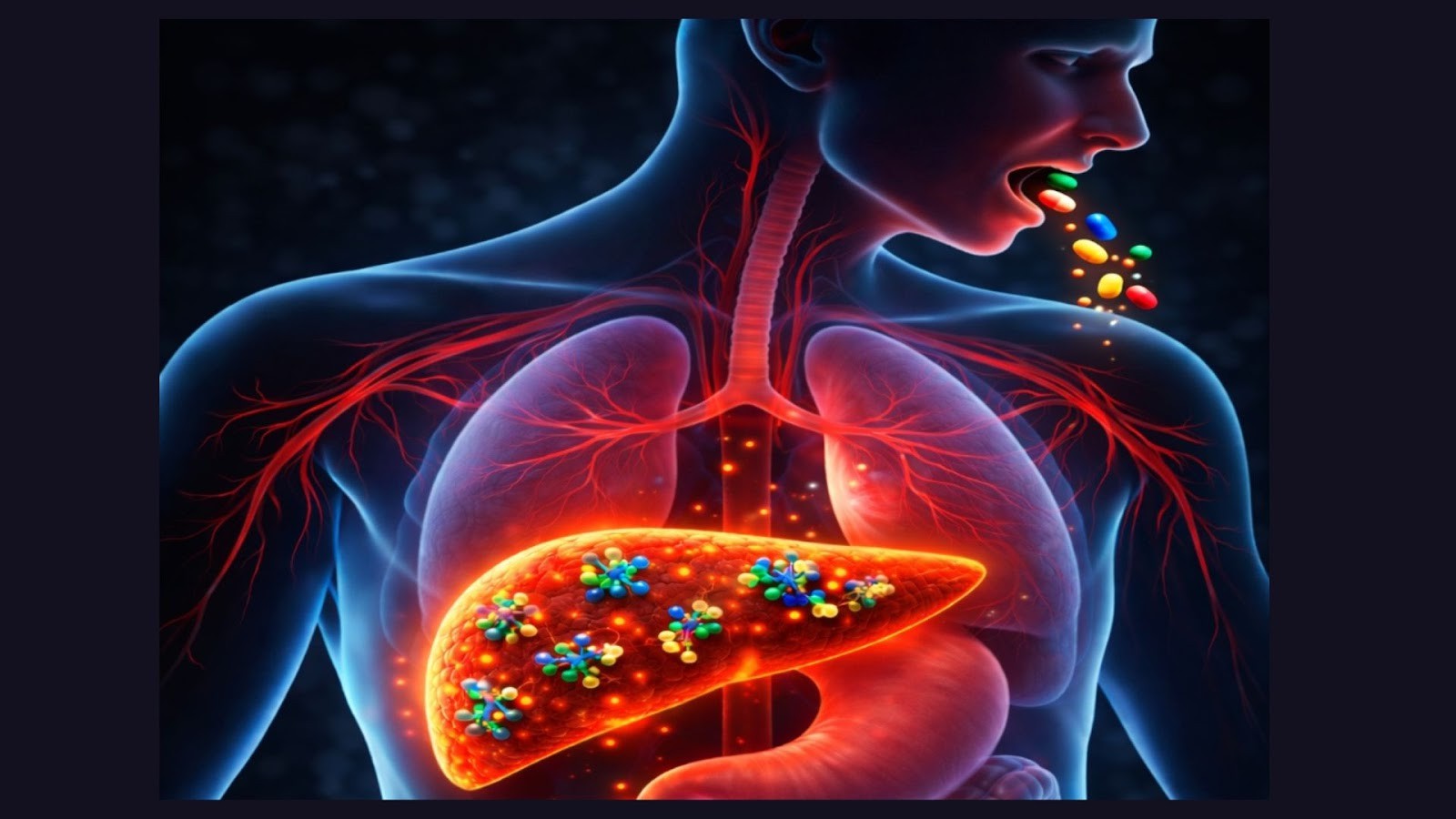
Antibiotics are among modern medicine’s greatest successes. They turn once-deadly infections into routine treatments and save countless lives each year. Yet even these trusted drugs can have unintended consequences. Doctors have long noticed that certain antibiotics raise liver enzymes or cause inflammation, and in rare cases, the damage can be severe, leading to liver failure. But the reasons are often unclear.
A new study by researchers at the Indian Institute of Technology Bombay, led by Prof. Ashutosh Kumar from the Department of Biosciences and Bioengineering and by Prof. Vetriselvan Subramaniyan from Sunway University, Malaysia, sheds light on this problem. The team shows that the answer may lie not in how strongly a drug acts, but in where and how it interacts with the outer layer of liver cells (cell membrane).
“Traditionally, people believed that a drug molecule's harm to cells comes from how much it ruptures the cell membrane. Our results can change that view,” says Prof. Kumar.
This insight has important implications for newer and safer classes of drug development. By studying how drugs engage with cell membranes at a molecular level, researchers may be able to predict toxicity risks before clinical trials begin.
Drug-induced liver injury is a major concern in medicine. It is one of the leading reasons medicines are withdrawn from the market or restricted after approval. The challenge is that liver injury is hard to predict. Many patients show no symptoms at first. Others are on multiple medications, making it challenging to identify the real culprit. Even closely related drugs can behave very differently.
Two such powerful antibiotic drugs are Teicoplanin and Oritavancin, which are used against serious bacterial infections such as hospital-acquired and ventilator-associated pneumonia. They are chemically similar and kill bacteria in nearly the same way. Yet in clinical practice, Teicoplanin is more often linked to liver problems, while Oritavancin is usually better tolerated. Until now, there was little mechanistic explanation for this difference.
Most studies of liver toxicity focus on how drugs are metabolised inside liver cells. Instead, the IIT Bombay team focused on the cell membrane, the fatty outer layer that surrounds each liver cell.
“The cell membrane is the first point of contact between a drug and liver cells. Any drug circulating in the blood must interact with the cell membrane before entering the cell or affecting cellular targets,” says Akash Kumar Jha, first author of the paper. This led the researchers to believe that early toxic effects often begin at the membrane level, which also hosts many proteins responsible for transport, signalling, and metabolism.
To study membrane-drug interactions in a controlled way, the researchers built artificial membranes that closely resemble those of liver cells. They then tested how the two drugs behaved when encountering this fatty surface using a suite of biophysical techniques, such as dynamic light scattering (DLS) and cryo–transmission electron microscopy (cryo-TEM). Researchers observed that Oritavancin appeared to be more disruptive. It caused the membranes to clump together and fuse, visibly altering their structure. Teicoplanin, by contrast, left the membranes largely intact.
At first glance, this result seemed to contradict clinical observations. If Oritavancin disrupts membranes more strongly, why does it cause less liver injury?
To understand these contrasting observations, the researchers examined where each drug localises within the cell membrane. Using advanced imaging and computer-based modelling, they found that Oritavancin quickly slips deep into the fatty interior of the membrane and stays there, while Teicoplanin remains near the membrane’s outer surface, where it sticks and interacts for long periods.
To see whether these membrane effects translated into real harm, the team studied rats treated with each antibiotic. Rats treated with Teicoplanin showed clear signs of liver injury: elevated liver enzymes, inflammation, and damage to liver tissue. Animals given Oritavancin showed much milder effects. Liver enzyme levels rose only slightly, and tissue damage was mild.
The researchers suggest that this difference arises because persistent surface-level interactions are particularly harmful.
“Teicoplanin is more harmful to the liver, even though it only slightly disrupts membrane structure. That is because it sticks to the membrane surface, changing the surface charge and how the outer lipid layer is packed and moves,” explains Mr. Jha.
By lingering at the membrane interface, Teicoplanin subtly alters the membrane’s electrical properties and interferes with normal cellular communication. Over time, these small disturbances can add up, leading to chronic stress and injury.
Oritavancin, despite causing stronger structural disruption, buries itself deeper in the membrane. Its effects are real but less likely to interfere directly with the membrane-based processes that keep liver cells functioning.
In short, toxicity is driven more by persistent stress at the membrane surface rather than by overall membrane damage. These results “shift the focus from ‘how much damage’ to ‘where and how long a drug interacts with the membrane’, helping explain why some drugs harm the liver more than others,” says Prof. Kumar.
Beyond the two antibiotics, the findings suggest a new way to predict drug safety based on detecting toxicity risks early in the drug development process by tracking how medicines interact with cell membranes in the lab. “By applying this membrane-focused approach, we may uncover why some treatments cause unexpected side effects and use that knowledge to design gentler compounds that are less toxic to healthy cells. Because these tests are relatively fast and scalable, they could be added to standard safety checks during drug development, helping researchers avoid costly failures later and accelerating the path toward safer medicines,” concludes Mr. Jha.
| Article Written By: | Manjeera Gowravaram |
| Image/ Graphic Credit: | Generated using OpenAI image generation tools and adapted by the authors of the study. |
| Link to Gubbi Labs: | - |
