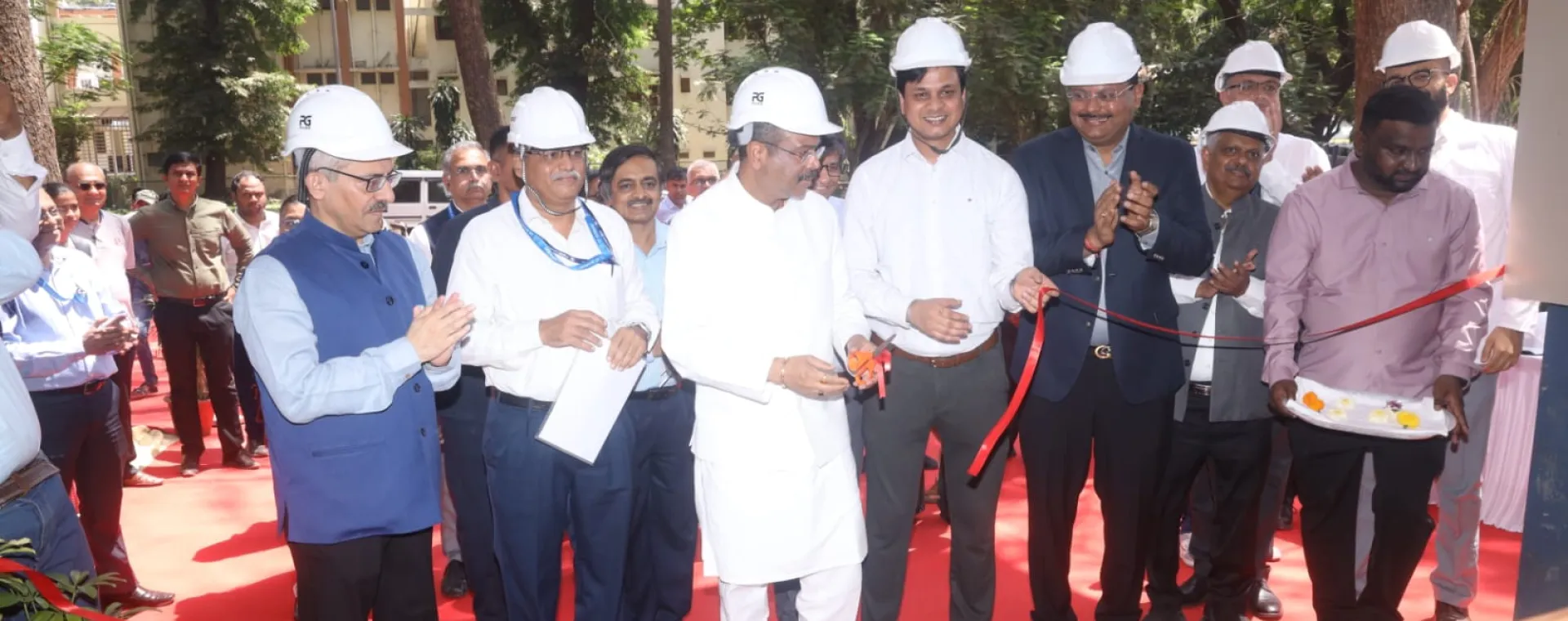
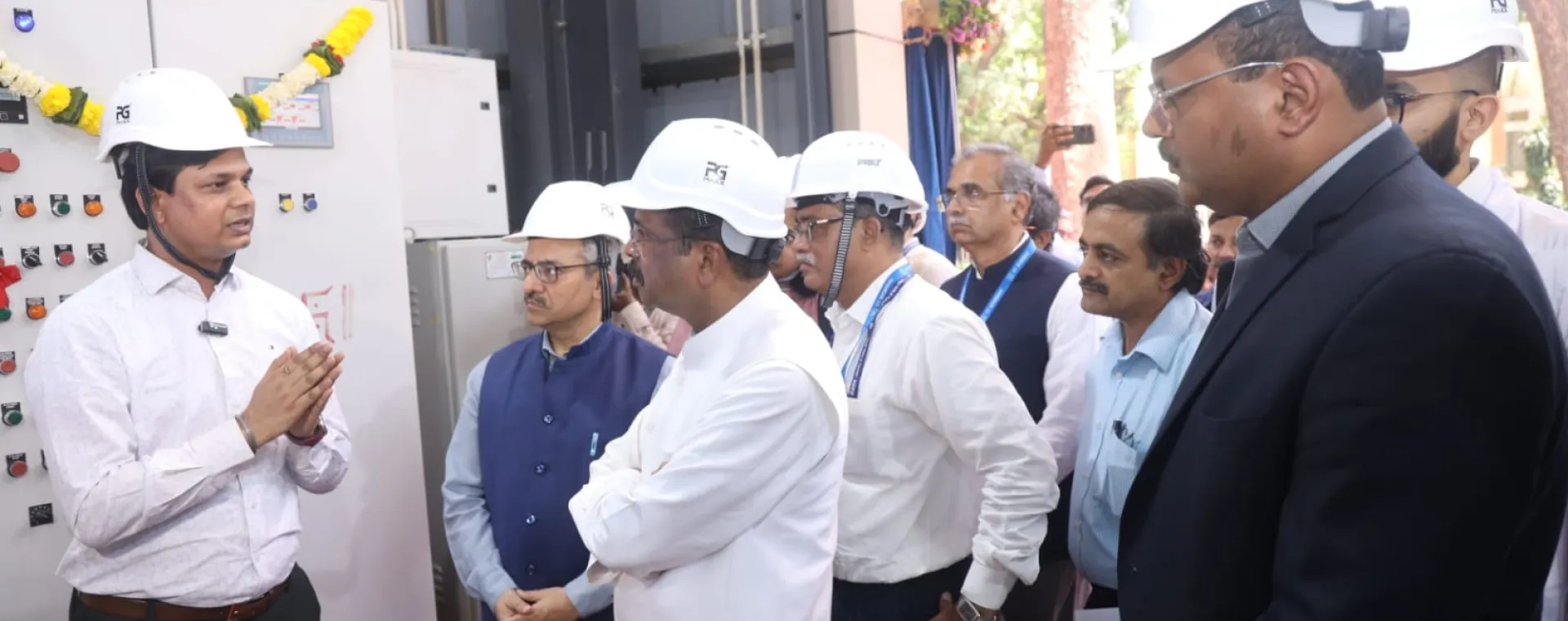
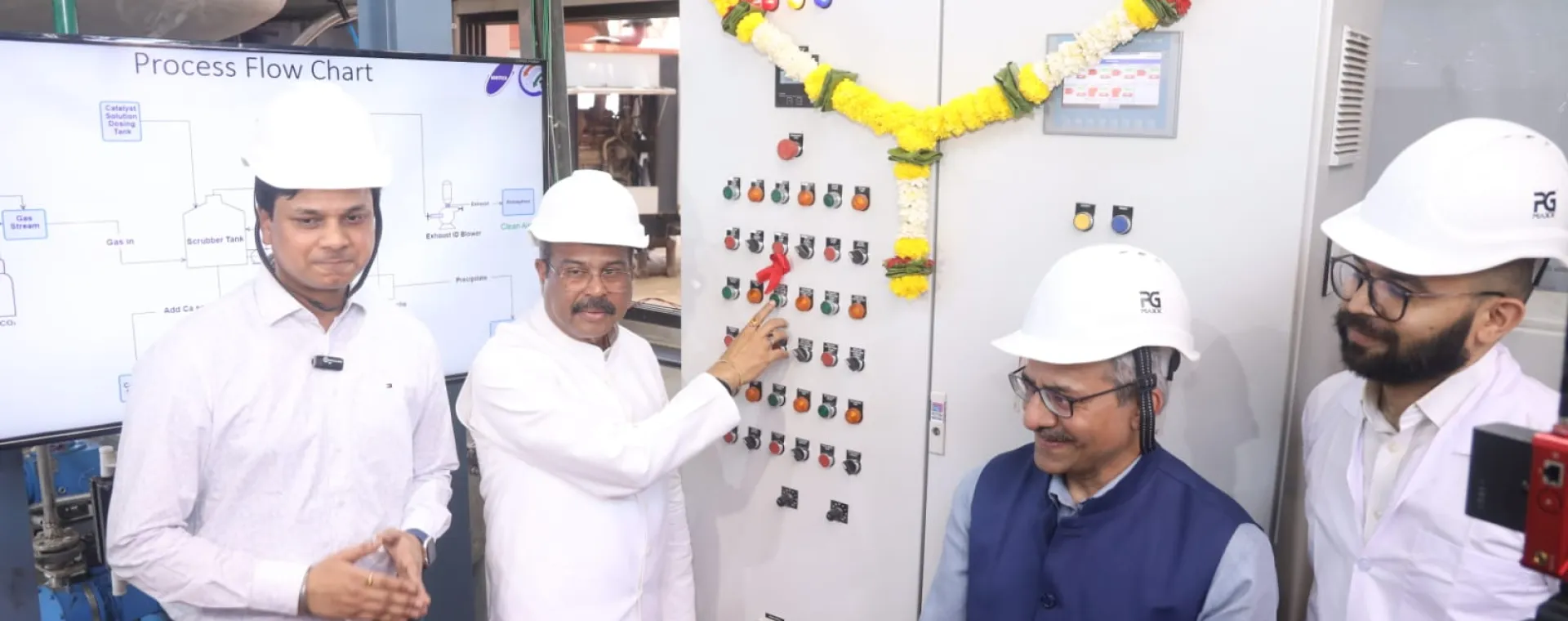
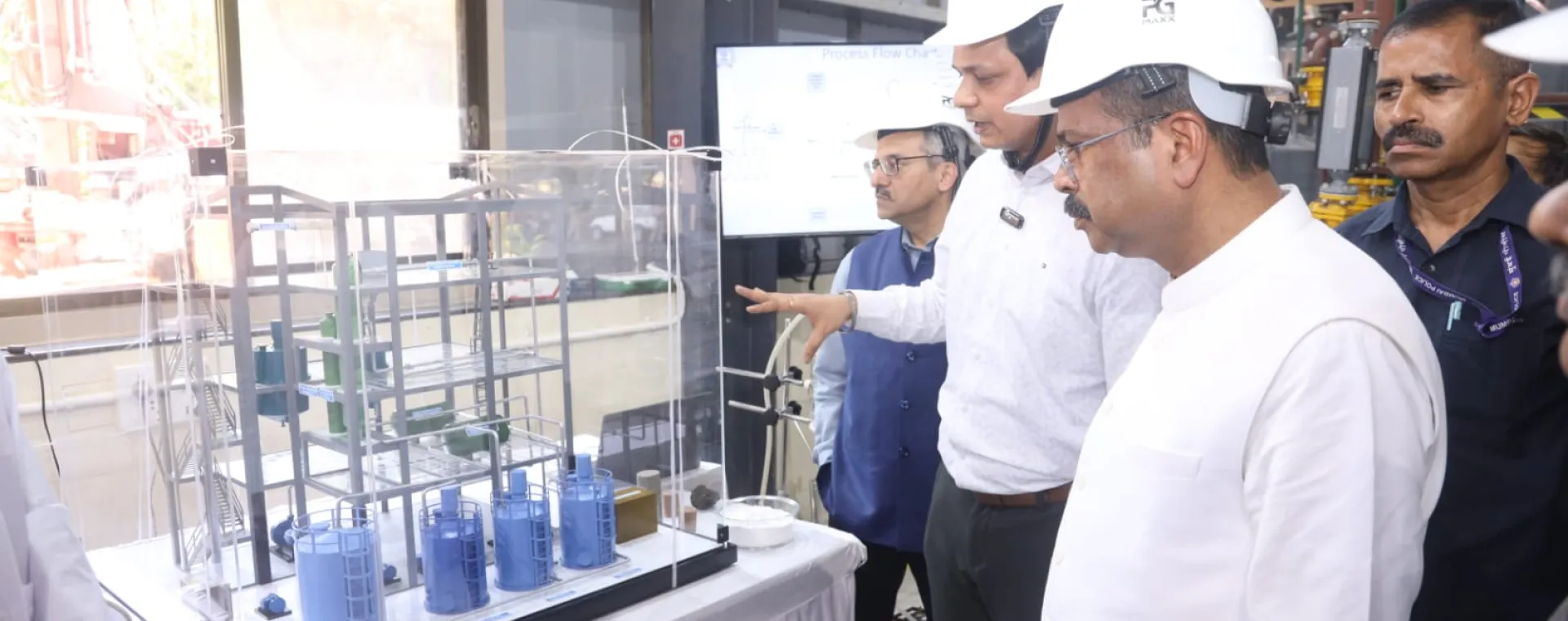
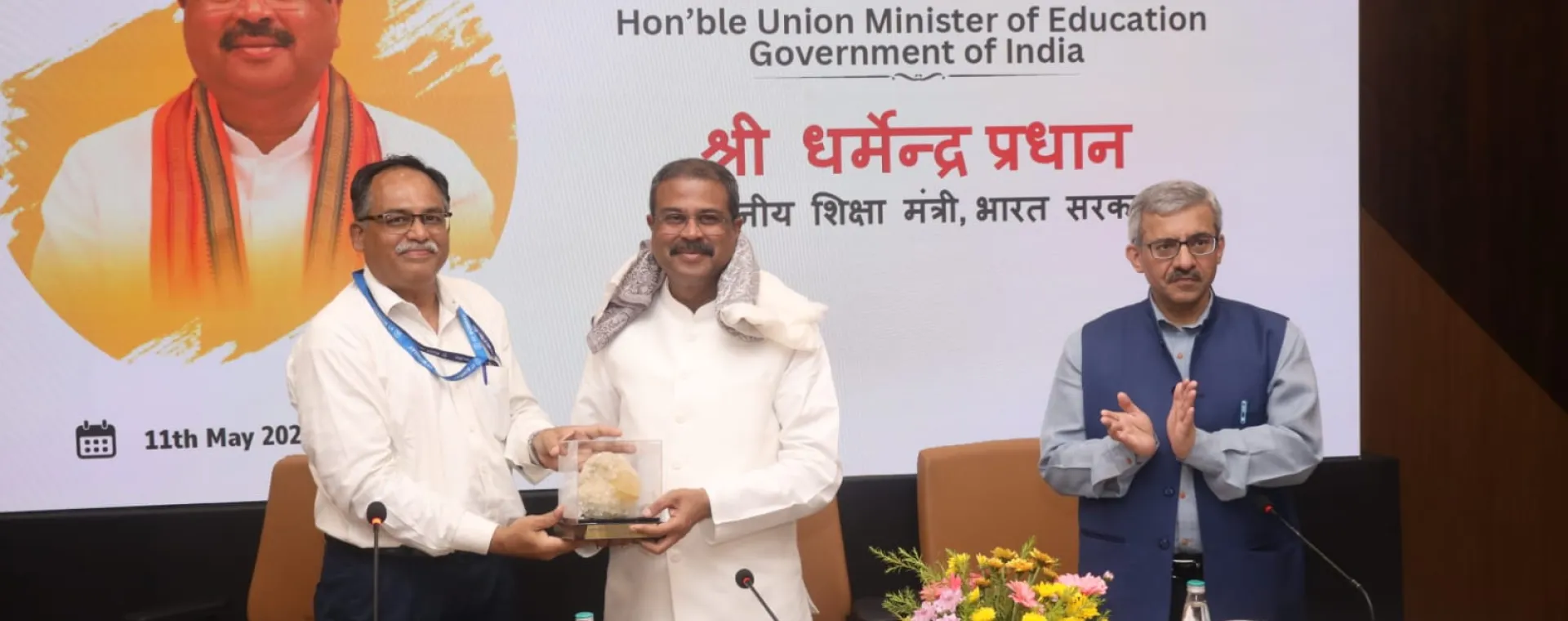
The Hon’ble Minister of Education, Shri Dharmendra Pradhan, inaugurated India’s first Integrated CCUS Field Laboratory Facility under Bharat Innovates 2026 on May 11, 2026. The event was held in the presence of Shri Vineet Joshi, Secretary, Department of Higher Education, Ministry of Education, Government of India; Prof. Shireesh Kedare, Director, IIT Bombay; Prof. Milind Atrey, Deputy Director (Academics, Research and Translation); Prof. Ravindra Gudi, Deputy Director (Finance, Infrastructure and Administration); Institute functionaries, faculty members, staff and students, and industry professionals, government representatives, and entrepreneurs.
The event marked the commissioning of an indigenously built Carbon Capture and Utilisation (CCU) Pilot facility of up to 3 tonnes-per-day capacity and the commencement of Geological CO₂ Sequestration (GCS) scientific drilling in the basalt formations for building robust storage monitoring protocols. The pioneering facility establishes India’s first end-to-end CCUS field laboratory, integrating indigenous carbon capture technology with carbon utilisation and permanent geological sequestration.
The facility demonstrates a self-reliant, closed-loop carbon mitigation approach rooted in indigenous innovation and aligned with the vision of Atmanirbhar Bharat. Developed at IIT Bombay with support from the Government of India, industry partners and the Institute’s innovation ecosystem, the project advances India’s Panchamrit climate commitments and long-term Net-Zero targets.
At the core of the facility is an advanced aqueous-based catalytic CO₂ capture technology developed entirely at IIT Bombay. The scalable, sustainable and cost-effective patented technology uses earth-abundant catalytic materials to capture carbon dioxide from ambient air as well as industrial flue gases. Importantly, the process is compatible with non-potable water sources such as industrial effluents and seawater, thereby significantly reducing the water-energy conflicts associated with conventional carbon capture systems. Following capture, the system enables rapid carbon valorisation by converting captured CO₂ into high-purity carbonate and bicarbonate salts through efficient catalytic reactions. These value-added mineral products can be directly utilised across sectors such as steel, cement, petrochemicals and pharmaceuticals, thereby creating a sustainable waste-to-wealth pathway.
A major component of the initiative is the commencement of scientific drilling for Geological CO₂ Sequestration in the Deccan Traps. The project aims to generate India’s first localized empirical data on reservoir characterization and storage capacity in basaltic formations. Researchers will investigate and compare supercritical and aqueous-phase CO₂ injection strategies to evaluate injectivity, fracture permeability, reactive surface area and long-term mineral trapping potential. The project is expected to significantly strengthen scientific understanding of in-situ mineral carbonation processes in basalt formations. Through geochemical reactions within the host rock, dissolved CO₂ can transform into stable carbonate minerals such as calcite and magnesite, enabling secure and permanent storage while minimizing the risks of atmospheric leakage or subsurface migration.
The integrated CCUS field laboratory also represents a major translational research achievement, bridging the gap between academic innovation and industrial deployment. The technology is being scaled up by UrjanovaC, a deep-tech venture incubated at the Society for Innovation & Entrepreneurship (SINE), IIT Bombay, founded by Prof. Vikram Vishal and Prof. Arnab Dutta, and is recognised among the leading start-ups featured in Bharat Innovates 2026.
The initiative is expected to serve as a national testbed for next-generation carbon management technologies and accelerate India’s emergence as a global leader in climate-tech innovation.
About India’s First Integrated CCUS Field Laboratory Facility: The concept and development an Integrated Carbon Capture, Utilisation and Storage (CCUS) Field Laboratory Facility was led by Prof. Vikram Vishal, Professor in the Department of Earth Sciences and Convener of the DST-National Centre of Excellence at Indian Institute of Technology Bombay, and is India’s first end-to-end pilot-scale platform integrating Carbon Capture and Utilisation (CCU) with Geological CO₂ Sequestration (GCS) in basalt formations. Developed with support from the Government of India, industry partners and IIT Bombay, the facility demonstrates an indigenous, closed-loop carbon mitigation pathway aligned with the vision of Atmanirbhar Bharat and India’s Net-Zero commitments. The facility features an advanced aqueous-based CO₂ capture technology developed at IIT Bombay that can capture carbon dioxide from ambient air and industrial emissions using non-potable water. The captured CO₂ can be converted into high-purity carbonate and bicarbonate salts for industrial applications, supporting a sustainable waste-to-wealth model. The Geological CO₂ Sequestration component marks India’s first pilot-scale scientific drilling initiative to assess the storage potential of the Deccan Traps. The facility serves as a national testbed for scalable carbon management technologies and supports the transition of climate innovations from research to industrial deployment.